What is biofilm?
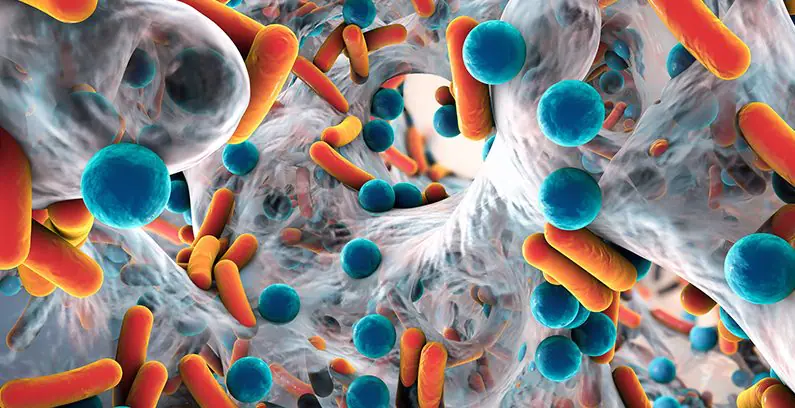
Biofilm is a specific ecological niche that can form on any surface in contact with water or, more generally, on all moist surfaces. It is composed of a three-dimensional framework made of inorganic material and organic polymers (collectively known as EPS, extracellular polymeric matrix) and a variety of microorganisms (bacteria, fungi, algae, etc.) that inhabit it, creating a perfect environment for proliferation. Within the biofilm, microorganisms find an abundance of nutrients for growth, but most importantly, protection from potentially harmful agents, such as disinfectants.
For this reason, the presence of biofilm can be a significant obstacle to effective disinfection and, consequently, a risk to maintaining adequate microbiological water quality. Cleaning and disinfecting a container are essential to ensure the safety of its contents. Therefore, effective water disinfection must include a thorough action against biofilm.
Disinfection and biofilm: Are all disinfectants the same?
Eliminating biofilm is a complex process, and not all disinfectants provide satisfactory results. This is due to the action of biofilm’s surface layers, which act as a shield for the microorganisms, often hidden in the deeper layers, where disinfectants cannot efficiently reach.
This is the case, for example, with chlorine (hypochlorite) and chlorine dioxide: these disinfectants are strong oxidants, meaning they are highly reactive compounds that easily react with oxidisable molecules of any kind. When used to disinfect a water system affected by biofilm, they tend to react with the molecules that form the biofilm’s three-dimensional structure, becoming rapidly consumed and thus unable to reach the deeper layers (where the microorganisms to be eliminated reside) at effective concentrations. Their reaction rate with the biofilm’s molecules is much faster than their diffusion rate within the biofilm.
This mechanism also explains the risk associated with using high concentrations of these strong oxidants: when used in large amounts, they can cause the detachment and subsequent release of biofilm fragments containing live, proliferating microorganisms, which can pose a potential health risk.
Monochloramine: effectiveness against biofilm
Monochloramine, on the other hand, due to its unique chemical nature, exerts a specific action against biofilm. Its mild oxidising power makes it more selective, allowing it not to react chemically with all oxidisable molecules and instead target only specific chemical groups. Specifically, monochloramine has been shown to react only with certain amino acids in proteins, compromising their function. By depriving microorganisms of some essential cellular systems, it leads to their elimination.
Thanks to this specific reactivity, monochloramine can efficiently penetrate the biofilm because it can pass through the surface layers without being “consumed” by reactions with the molecules that form them. As a result, it can reach the microorganisms in the deeper layers at effective concentrations and exert its disinfecting action.
In this way, the risk that biofilm removal will be accompanied by the sudden release of fragments containing live cells is effectively eliminated, making the action on biofilm not only more efficient but also safer.