
How important is the disinfection of drinking water? The WHO’s opinion
The disinfection of drinking water is essential to ensure that the water available to users is microbiologically safe. In its 2022 “Guidelines for drinking-water quality,” the World Health Organization itself emphasises the undeniable importance of disinfection for the provision of safe water.
To demonstrate this, the document clearly states that the potential health consequences associated with microbial contamination risks are of such magnitude that controlling this risk must always be a priority, and disinfection should never be compromised, not even in an attempt to control by-products that may result from it.
In addition to ensuring adequate initial disinfection, which is a critical step in the treatment of both surface and groundwater (when the latter is at risk of microbial contamination), it is essential to ensure an adequate residual disinfection, which serves as an important preventive barrier against recontamination and microbial proliferation along the distribution network. This is the only way to ensure that water reaches taps with the same level of microbiological safety as at the point of origin.
Monochloramine and drinking water disinfection
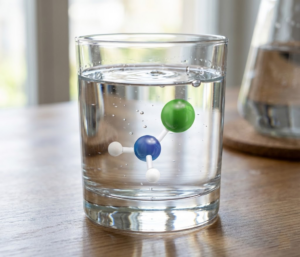
In the aforementioned WHO guidelines, monochloramine is identified as a disinfectant particularly suitable for secondary disinfection, precisely because, due to its chemical properties, it helps reduce the amount of disinfection by-products (especially trihalomethanes) and, given its stability and persistence, provides better disinfectant coverage along the distribution network, even in long and extensive networks or in cases of prolonged water retention in pipes.
Considering these two aspects, it becomes clear why monochloramine is particularly suited for this application: its specific properties enable the maintenance of adequate residual disinfection, thus achieving microbiological control without compromising on the issue of by-products, which are minimised.
Moreover, the WHO highlights additional benefits of using this disinfectant, such as reducing the impact of disinfection on the taste and odour of the water, thanks to its organoleptic properties and low perceptibility.
Due to its mild oxidising characteristics, it is not particularly suited for primary disinfection (a process that requires longer contact times or higher concentrations), for which more reactive products such as hypochlorite or, even better, chlorine dioxide are preferred.
As for reference concentration values, in its 2004 report “Monochloramine in Drinking-water,” the WHO established a guideline value of 3 mg/l as safe for human health. Typically, drinking water contains concentrations between 0.5 and 2 mg/l, while higher concentrations are recommended for controlling Legionella in hot water systems, as indicated by national and European guidelines.
In the recent national regulatory update concerning drinking water quality, specifically Legislative Decree 18/2023, the importance of verifying the effectiveness of disinfection processes, both during preparation and distribution, is reiterated, as well as the need to control the process so that the concentration of by-products is as low as possible, without compromising the effectiveness of the disinfection itself.
No specific references are provided regarding the disinfectants to be used or their reference concentrations. However, the use of monochloramine is clearly contemplated, as it is recommended that, when using monochloramine, the levels of ammonium and nitrites, potential by-products of a poorly conducted disinfection process, be monitored.
For this reason, monochloramine becomes an ally in drinking water disinfection.