
Legionella: why is it a threat?
Since its initial appearance during the famous Philadelphia outbreak, where it was first identified, *Legionella pneumophila* has immediately posed a serious risk to human health, making prevention crucial.
Based on current knowledge, more than 70 species belong to this genus of ubiquitous Gram-negative bacteria, found worldwide in both natural water bodies and artificial water systems. Ecologically, what makes this genus peculiar is its ability to live and proliferate at temperatures ranging from 25 to 50°C, or even higher.
This makes domestic hot water circuits within buildings particularly prone to uncontrolled proliferation. At the same time, the continuous rise in temperatures, especially during summer, is leading to a growing concern regarding cold water systems as well. However, at-risk systems are not limited to plumbing installations: cooling towers, industrial water systems, cooling and humidification systems, and even fountains and whirlpools can harbour this serious threat to human health.
What can significantly contribute to the proliferation of Legionella in all the aforementioned systems is the lack of adequate water flow or replacement and the presence of inorganic (e.g., limescale) or organic (e.g., biofilm) deposits, which provide protection to the bacteria, creating a particularly favourable microenvironment for their uncontrolled growth.
Why does Legionella pose a risk to human health? Some species within the genus are opportunistic pathogens, meaning they can cause serious illness in humans, especially in individuals with predisposing factors (e.g., immunodeficiency, respiratory problems, smoking, age). Among these, Legionella pneumophila is responsible for about 90% of known infection cases.
Infection with Legionella can manifest as a milder illness with flu-like symptoms, known as Pontiac Fever, or as a more severe pneumonia, Legionnaires’ Disease, with an overall mortality rate of 10-15%, rising to 30%-50% in nosocomial cases. To further understand the socio-health impact of infections caused by this pathogen, it is worth noting that, according to the World Health Organization (WHO), Legionella is responsible for the highest healthcare burden in the European Union among waterborne infections.
It is therefore no surprise that this pathogen is given special consideration at the regulatory level, and a preventive approach is promoted to reduce the associated risk.
Legionella Prevention: regulations and guidelines
According to Legislative Decree 81/2008, also known as the “Consolidated Law on Occupational Health and Safety,” Legionella is classified as a “group 2 biological agent” and, therefore, a potential hazard to workers’ health. Consequently, appropriate preventive and corrective actions are explicitly required to minimise the associated risk.
More recently, Legislative Decree 18/2023, which transposed European Directive 2020/2184 on the quality of water intended for human consumption, introduced Legionella as a relevant parameter for determining the compliance of drinking water, particularly concerning internal building distribution networks. It set a general limit of 1000 CFU/l, which must not be exceeded, and included it among the variables to be considered for the definition of water safety plans.
These plans are based on a holistic approach to risk assessment and prevention, closely mirroring the framework already proposed by various guidelines for evaluating and preventing Legionella risk.
The first recommendations in this regard come from the WHO, which published “Legionella and the prevention of legionellosis” in 2007. This document aims to provide theoretical and operational guidance for assessing and managing risk in various contexts, including healthcare facilities, tourism and hospitality sectors, with dedicated sections on cooling towers, water systems, whirlpools, and swimming pools.
At the European level, in 2017, the ESGLI (ESCMID Study Group for Legionella Infection) published the “European Technical Guidelines for the Prevention, Control and Investigation of Infections Caused by Legionella species,” which are currently under review. Echoing the structure of the previous WHO document, these guidelines aim to provide (particularly for the hospitality sector) guidance on risk assessment, Legionella control and prevention, water treatment methods for various at-risk systems, and investigative and control approaches in the event of an outbreak.
National guidelines are also under review, specifically the “Guidelines for the prevention and control of legionellosis” published in 2015 by an interdisciplinary group coordinated by the Ministry of Health and the Istituto Superiore di Sanità. These guidelines also aim to provide updated information on legionellosis, various infection sources, diagnostic and investigative methods, and recommended approaches for effective risk prevention and control.
Monochloramine: an effective solution for managing Legionella risk.
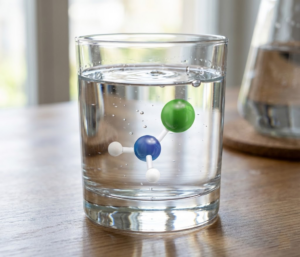
All the aforementioned guidelines highlight monochloramine as an effective system for controlling Legionella proliferation in water systems.
As early as the OMS’s 2007 document, monochloramine was noted for its greater persistence compared to chlorine and its ability to penetrate biofilm—a key factor in ensuring effective anti-Legionella action due to biofilm’s role in fostering pathogen growth. It was no coincidence that a lower incidence of legionellosis was reported in hospitals supplied with water disinfected using monochloramine.
However, the report also noted the lack of suitable technological solutions for using this disinfectant in building internal networks, as at the time, it was only employed in water utilities for secondary disinfection.
Eight years later, the national guidelines could benefit from the technological advances and rapidly emerging scientific evidence, recommending the use of monochloramine as a strategy for Legionella control in building water circuits.
According to the guidelines, with a suggested residual concentration between 2 and 3 mg/l, satisfactory microbiological results can be achieved, addressing many of the issues associated with dosing hypochlorite and chlorine dioxide. Compared to these, monochloramine is described as more stable and persistent, less volatile, less prone to generating disinfection by-products, more compatible with materials used in distribution networks, and more effective even in areas with low flow/consumption or those affected by biofilm presence.
Similar indications are reported in the 2017 ESGLI document, which highlights the now well-established availability of technologies suitable for treating internal building water circuits.
In addition to these guidelines, numerous scientific studies published in international journals demonstrate the effectiveness of monochloramine for managing Legionella risk, showcasing real cases where this system was successfully applied in resolving or preventing this issue.